Look a Little Closer
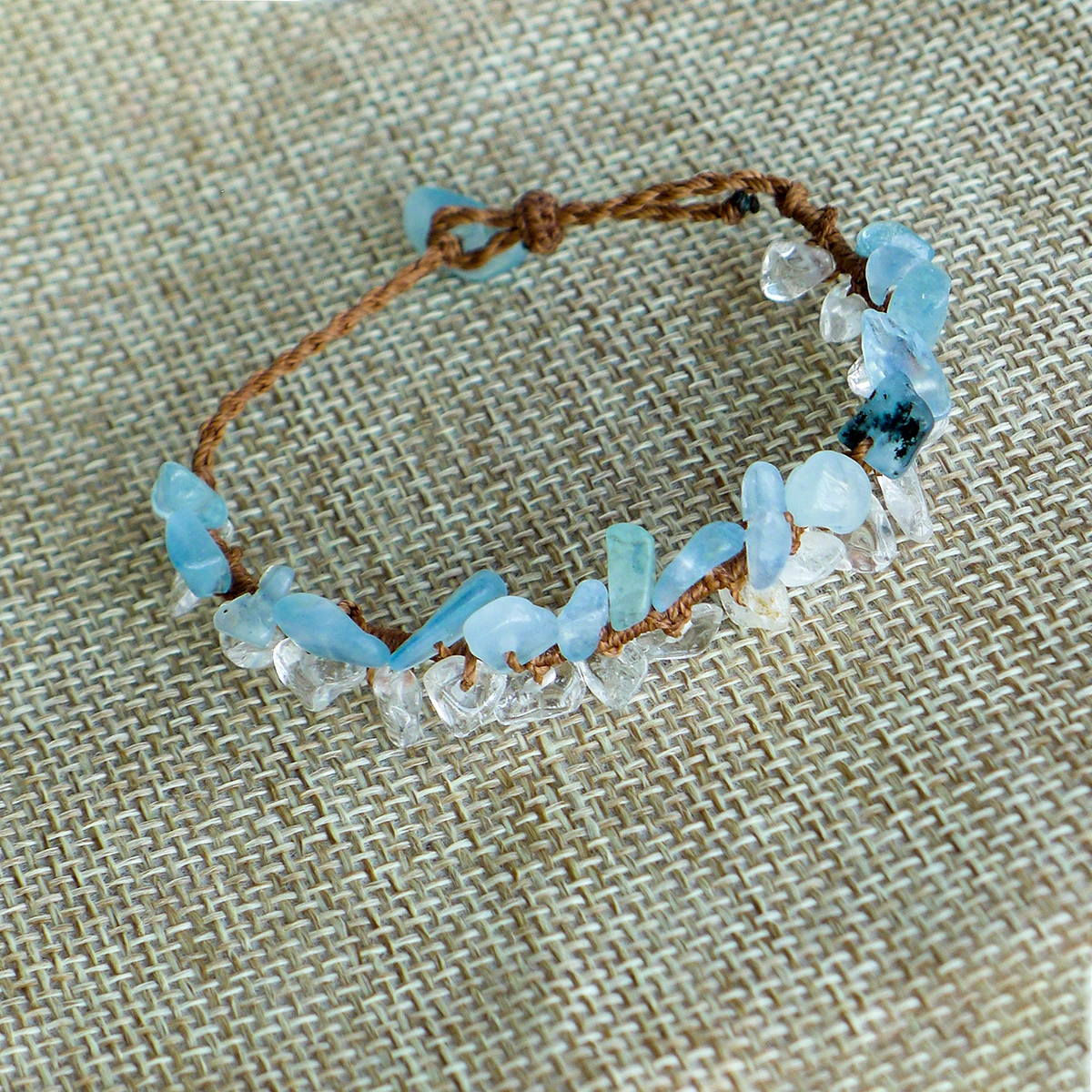
When you look closely at a natural gemstone bracelet, you might notice something interesting.
Even when the beads are made from the same type of stone, some look darker and others lighter. Some appear quite clear, while others have cloudy patterns inside.
You may even see these differences between beads on the same bracelet.
That isn't necessarily a bad thing. Understanding these details can help you know what to expect when buying natural gemstone jewelry.
The Same Stone Can Have Different Shades
Natural gemstones don't always have perfectly even color.
Aquamarine, for example, can appear in different shades of blue. Some stones have a slightly greenish tone, while others are much paler.
Even after cutting and polishing, two beads of the same gemstone variety may not look identical.
Lighting, backgrounds, and the screen you're viewing can also affect how a stone's color appears in a photograph.
That's why it's worth reading the product description as well as looking at the pictures, especially when color matters to you.
What Are Those Little Clouds and Marks?
Some gemstones contain tiny internal features, mineral inclusions, or cloudy areas.
These details may be related to the conditions in which the stone formed and its internal structure.
Sometimes they're subtle, becoming more noticeable only when the light catches them.
But not every visible mark should automatically be called a natural feature. Damage, surface wear, and certain treatments can also affect how a stone looks.
And clouds or inclusions alone aren't proof that a gemstone is natural.
Shape Makes a Difference, Too
Color and internal texture aren't the only things that vary. Shape matters, too.
Smooth round beads have a very different look from irregular gemstone chips.
Even after they're shaped and polished, stone chips can differ in size, outline, and thickness. In a hand-knotted bracelet, those differences can affect how the stones sit together.
A handmade piece can keep some of that uneven, natural appearance.
But natural variation shouldn't be an excuse for poor quality. A broken stone, a loose knot, or a piece that looks substantially different from its description still deserves attention.
Natural Doesn't Always Mean Untreated
There's another detail that's easy to overlook: a gemstone formed in nature isn't necessarily untreated.
Some gemstones may be heated, dyed, or treated in other ways to change their appearance.
So "natural" and "untreated" are not the same thing.
If treatment information matters to you, check the product details and ask the seller when necessary.
The presence of natural-looking patterns doesn't tell you whether a stone has been treated.
What Should You Look for Before Buying?
When choosing a natural gemstone bracelet, take a moment to look through the product photographs.
Notice the color, shape, and transparency of the stones, along with the knots and other construction details.
If the description mentions natural variation or differences between handmade pieces, look for an explanation of what may vary.
And if you've fallen in love with a very particular shade or arrangement of stones, it's worth asking whether you'll receive the exact piece shown in the photographs.
A little care before ordering can help you understand what to expect when your jewelry arrives.
Different Doesn't Have to Mean Less Beautiful
One thing I enjoy about natural gemstone jewelry is noticing the small differences between the stones.
One bead might be a little darker. Another is lighter. Some are clear, while others have tiny patterns inside.
Together, they may not look perfectly identical, but they can still feel balanced.
Of course, everyone likes something different. Some people prefer evenly colored, carefully matched beads. Others enjoy the irregular look of gemstone chips.
Neither has to be better.
What matters is understanding the material, knowing what you're buying, and choosing a piece you genuinely like.